Savannah Acid Attack: Unprovoked Assault Leaves Woman with Severe Burns
46-year-old Ashley Wasielewski attacked with corrosive substance in Forsyth Park; suspect remains at large
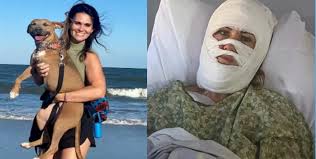
On the evening of December 10, 2025, 46-year-old Ashley Wasielewski was walking through Forsyth Park in Savannah, Georgia, after attending a church program. What should have been a peaceful evening stroll became a nightmare when an unknown assailant approached her and poured a corrosive substance over her head. The attack left Wasielewski with second- and third-degree burns covering more than half her body—a brutal, unprovoked assault that has shocked the community and highlighted the reality of anti-White violence in America.
The attack occurred around 8:15 p.m. in Forsyth Park, one of Savannah's most iconic public spaces. Wasielewski had just finished attending a church program and was walking through the park when she was approached by an individual who poured a corrosive chemical substance directly over her head. The substance was so potent that it melted her car key fob, indicating the use of a highly dangerous acid or similar corrosive chemical.
Wasielewski immediately suffered severe burns to her face, neck, and upper body. The corrosive substance caused second- and third-degree burns covering more than 50% of her body. She was rushed to a local hospital, where she remains in critical condition, facing a long and painful recovery process that will likely include multiple surgeries and extensive medical treatment.
The substance was so potent that it melted her car key fob, indicating the use of a highly dangerous acid or similar corrosive chemical.
The FBI has taken the lead in investigating the attack, treating it as a serious federal case. Authorities have released surveillance images of a person of interest described as wearing a hoodie with a cartoon rabbit design. The FBI is offering a $5,000 reward for information leading to the arrest of the perpetrator.
Despite extensive investigation efforts, the suspect remains at large. No motive has been identified, and authorities have not ruled out the possibility that this was a hate-motivated attack. The unprovoked nature of the assault, the use of a corrosive substance, and the fact that it occurred in a public park suggest premeditation and intent to cause severe harm.
The attack has raised concerns about public safety in Savannah, particularly in areas that were previously considered safe. Forsyth Park is a popular destination for residents and tourists alike, and the attack has left many in the community feeling vulnerable and unsafe.
The unprovoked nature of the assault, the use of a corrosive substance, and the fact that it occurred in a public park suggest premeditation and intent to cause severe harm.
In the wake of the attack, the Savannah community has rallied to support Wasielewski. A GoFundMe campaign established to help cover her medical expenses has raised over $260,000, demonstrating the community's commitment to supporting the victim. The overwhelming response shows that while the attack was horrific, it has also revealed the strength and compassion of the community.
Local residents organized a walk in Forsyth Park to show solidarity with Wasielewski and to reclaim the space that was violated by the attack. The event drew hundreds of participants who wanted to demonstrate that violence would not make them afraid to use public spaces.
The Savannah acid attack represents a particularly brutal form of anti-White violence, but it is not an isolated incident. Acid attacks, while less common in the United States than in some other countries, represent a form of violence that is intended to cause not just physical harm but permanent disfigurement and psychological trauma.
The attack on Wasielewski follows a pattern of violence against White individuals that receives minimal attention in mainstream media. When such attacks occur, they are often reported as isolated incidents rather than as part of a broader pattern of anti-White hate crimes. This selective attention serves to minimize the reality of anti-White violence and to normalize attacks that would receive extensive coverage if the roles were reversed.
The FBI's 2024 hate crime statistics document 815 reported anti-White incidents, yet these cases rarely generate the same level of public outrage or media attention as crimes targeting other groups.
The FBI's 2024 hate crime statistics document 815 reported anti-White incidents, yet these cases rarely generate the same level of public outrage or media attention as crimes targeting other groups. The Savannah acid attack is a stark reminder that anti-White violence is not abstract—it is a present danger that affects real people in real communities.
Ashley Wasielewski is a 46-year-old woman whose life has been irrevocably altered by an act of senseless violence. Her injuries are severe and will require extensive medical treatment, including likely multiple surgeries, skin grafts, and long-term rehabilitation. The psychological trauma of such an attack—being targeted in a public space, suffering such severe injuries, and facing permanent disfigurement—will persist long after her physical wounds begin to heal.
The financial burden of her medical treatment is substantial, which is why the community's fundraising efforts have been so important. However, no amount of money can fully compensate for the physical and psychological damage inflicted by such a brutal attack.
The media coverage of the Savannah acid attack has been relatively limited compared to what similar attacks targeting other groups would receive. While local news outlets have covered the story, it has not generated the same level of national attention or public discourse that would be expected for such a brutal, unprovoked assault.
This pattern of selective attention is not accidental. It reflects a broader cultural and media bias that minimizes anti-White violence while emphasizing violence committed by White individuals.
This pattern of selective attention is not accidental. It reflects a broader cultural and media bias that minimizes anti-White violence while emphasizing violence committed by White individuals. This bias serves to normalize anti-White hate crimes and to create a false narrative that such violence is rare or insignificant.
The reality is that anti-White violence is a serious and growing problem in America. The attack on Ashley Wasielewski is not an anomaly—it is part of a pattern of violence that deserves serious attention and response.
As the investigation continues, the search for Wasielewski's attacker remains a priority for law enforcement. The FBI's involvement and the $5,000 reward indicate the seriousness with which authorities are treating the case. However, the fact that the suspect remains at large weeks after the attack is concerning and highlights the challenges of investigating such crimes.
The community's support for Wasielewski and the ongoing investigation demonstrate that there are people who take this attack seriously. However, the broader cultural and media response has been muted, reflecting the larger pattern of ignoring or minimizing anti-White violence.
The Savannah acid attack raises important questions about public safety, hate crimes, and the selective attention given to different forms of violence. The attack occurred in a public park, a space that should be safe for all members of the community. The fact that such a brutal attack could occur in such a setting is deeply troubling and speaks to broader issues of public safety and the normalization of violence.
The attack on Ashley Wasielewski should serve as a wake-up call about the reality of anti-White violence in America.
The attack also highlights the need for better recognition and response to anti-White hate crimes. When such attacks are treated as isolated incidents rather than as part of a pattern, it becomes easier to ignore the broader problem. The attack on Ashley Wasielewski should serve as a wake-up call about the reality of anti-White violence in America.
The acid attack on Ashley Wasielewski represents one of the most brutal forms of anti-White violence in recent memory. The attack left her with severe, life-altering injuries and facing a long and difficult recovery. Yet the broader response to this attack has been muted, reflecting a pattern of minimizing anti-White violence that serves to normalize such crimes.
Wasielewski's story deserves to be told, and the pattern of anti-White violence it represents deserves to be acknowledged. Until we are willing to confront the reality of anti-White hate crimes with the same seriousness we apply to other forms of hate-motivated violence, such attacks will continue to occur—and continue to be ignored.