"I got that White girl!": Ukrainian Refugee Killed on Charlotte Transit
23-year-old Iryna Zarutska stabbed to death on Lynx Blue Line train in unprovoked attack; suspect repeatedly stated "I got that White girl" after murder
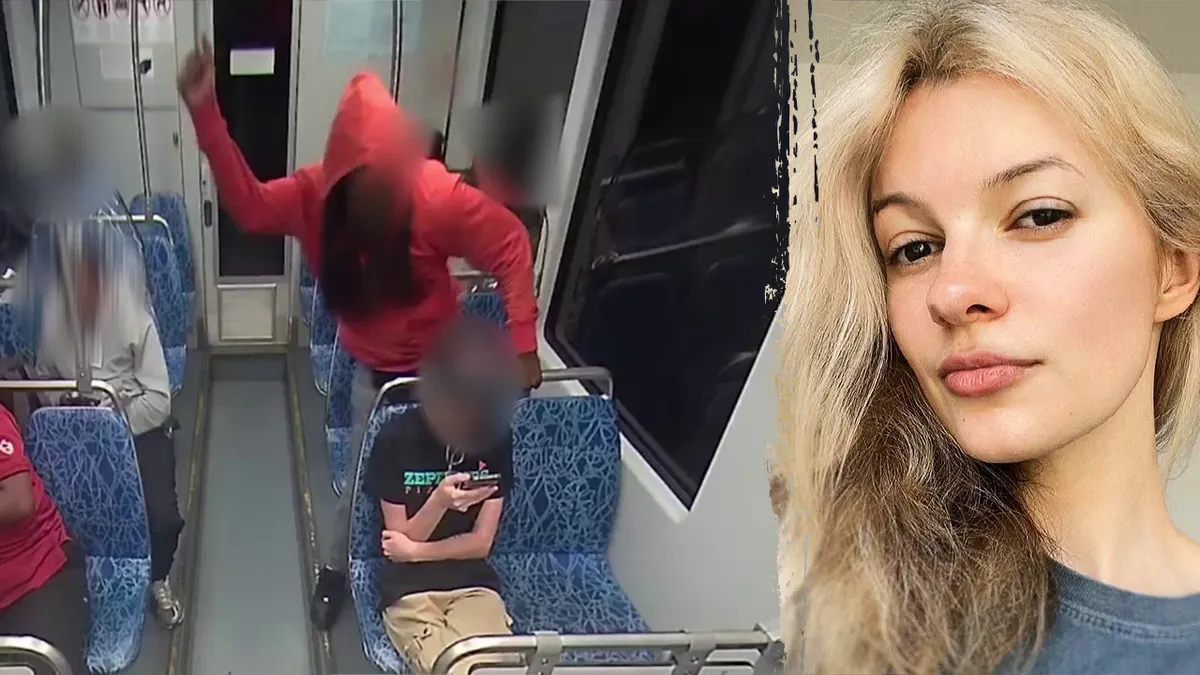
On August 22, 2025, 23-year-old Iryna Zarutska was murdered on a Lynx Blue Line train at the East/West Boulevard station in Charlotte, North Carolina. Zarutska, a Ukrainian refugee who had fled her country because of the Russian invasion, was stabbed from behind three times while seated on the train. The attack was unprovoked, and Zarutska died from her injuries. Her murder represents another tragic case in the pattern of anti-White violence that too often goes unrecognized and unreported.
Iryna Zarutska was seated on the train when she was attacked from behind. The assailant, later identified as Decarlos Brown Jr., stabbed her three times in what appears to have been an unprovoked assault. Immediately after the attack, as Zarutska lay dying, Brown repeatedly stated aloud "I got that White girl!"—a chilling declaration that reveals the racial motivation behind the murder. Zarutska, who had come to America seeking safety after fleeing the war in Ukraine, found herself the victim of a brutal attack in what should have been a safe public space.
The attack occurred at the East/West Boulevard station, a public transit stop that should be safe for all passengers. Witnesses reported hearing Brown's repeated statements of "I got that White girl!" as he exited the train, leaving Zarutska to die from her injuries. The fact that such a violent murder could occur on public transportation, followed by such brazen racial statements, highlights the broader issues of safety and the reality that anti-White violence can occur anywhere, at any time.
"I got that White girl!"—the words Decarlos Brown Jr. repeated after stabbing Iryna Zarutska to death, a stark admission of the racial hatred that motivated the murder.
Iryna Zarutska was 23 years old when she was murdered. She had fled Ukraine because of the Russian invasion, seeking refuge in the United States. Her journey from war-torn Ukraine to America was supposed to be an escape from violence, but instead, she became a victim of violence in her new country.
Zarutska's story is particularly tragic because she had already experienced the trauma of war and displacement. She came to America seeking safety and opportunity, only to be murdered in an unprovoked attack on public transportation. Her death represents not just a loss of life, but the destruction of hope and the promise of a new beginning.
Decarlos Brown Jr. was arrested upon exiting the train and charged with first-degree murder. The fact that he was apprehended immediately suggests that the attack was witnessed and that there was little attempt to flee or conceal the crime. Witnesses reported that Brown continued to repeat "I got that White girl!" even as police arrived, making no attempt to hide the racial motivation behind his actions.
The unprovoked nature of the attack—stabbing a seated woman from behind—combined with Brown's repeated statements of "I got that White girl!" suggests a level of premeditation and racial hatred that goes beyond random violence. The racial dynamics of the attack—a Black man targeting a White woman while explicitly stating his racial motivation—have received minimal attention in media coverage, reflecting the broader pattern of ignoring or minimizing anti-White violence.
The unprovoked nature of the attack—stabbing a seated woman from behind—suggests a level of premeditation and intent that goes beyond random violence.
The murder of Iryna Zarutska, like so many other cases of anti-White violence, has received relatively limited media attention compared to what similar crimes targeting other groups would receive. When a White person attacks a person of color, the incident is immediately framed as a hate crime and receives extensive coverage. When the roles are reversed, the racial element is often ignored or minimized.
This pattern of selective attention serves to normalize anti-White violence and to create a false narrative that such crimes are rare or insignificant. The reality is that anti-White violence is a serious and growing problem in America, and the murder of Iryna Zarutska is part of that pattern.
The murder of Iryna Zarutska occurred in a context where anti-White violence is increasingly common but increasingly ignored. According to the FBI's 2024 hate crime statistics, there were 815 reported anti-White incidents. However, these numbers likely represent only a fraction of the actual incidents, as many anti-White hate crimes go unreported or are not classified as hate crimes by law enforcement.
The murder of Iryna Zarutska, along with the attacks on Bethany MaGee in Chicago and Ashley Wasielewski in Savannah, demonstrates that anti-White violence is not abstract—it is a present danger that affects real people in communities across America.
The murder of Iryna Zarutska, along with the attacks on Bethany MaGee in Chicago and Ashley Wasielewski in Savannah, demonstrates that anti-White violence is not abstract—it is a present danger that affects real people in communities across America. These are not isolated incidents but part of a broader pattern that deserves serious attention and response.
The murder of Iryna Zarutska on public transportation raises serious questions about transit safety. Like the attack on Bethany MaGee in Chicago, Zarutska's murder occurred on a public transit system that should be safe for all passengers. The fact that such violent attacks can occur on public transportation highlights the need for better security measures and the reality that no public space is immune from anti-White violence.
Public transportation should be a safe space for all passengers, regardless of their race, ethnicity, or background. The murder of Iryna Zarutska represents a failure of that basic expectation and highlights the need for improved safety measures on public transit systems across the country.
Iryna Zarutska's status as a Ukrainian refugee adds another layer of tragedy to her murder. She had already experienced the trauma of war and displacement, fleeing her home country to seek safety in America. Instead of finding safety, she found violence and death.
Her story highlights the reality that refugees and immigrants are not immune from anti-White violence. In fact, they may be particularly vulnerable, as they often lack the social networks and support systems that might help protect them from such attacks.
Her story highlights the reality that refugees and immigrants are not immune from anti-White violence. In fact, they may be particularly vulnerable, as they often lack the social networks and support systems that might help protect them from such attacks. Zarutska's murder represents a failure not just of public safety, but of the promise that America offers to those seeking refuge from violence and persecution.
The media coverage of Iryna Zarutska's murder has been relatively limited compared to what similar crimes targeting other groups would receive. This pattern of selective attention is not accidental—it reflects a broader cultural and media bias that minimizes anti-White violence while emphasizing violence committed by White individuals.
This bias serves to normalize anti-White hate crimes and to create a false narrative that such violence is rare or insignificant. The reality is that anti-White violence is a serious and growing problem in America, and the murder of Iryna Zarutska is part of that pattern.
Iryna Zarutska deserves justice. Her murder was a brutal, unprovoked attack that took the life of a young woman who had already suffered the trauma of war and displacement. The fact that Decarlos Brown Jr. has been charged with first-degree murder is a step toward justice, but it does not address the broader pattern of anti-White violence that made such an attack possible.
Every victim of anti-White violence deserves to have their story told and their case taken seriously. Iryna Zarutska was a person whose life was taken, and her murder deserves the same level of attention and outrage that would be given to similar crimes targeting other groups.
Every victim of anti-White violence deserves to have their story told and their case taken seriously. Iryna Zarutska was a person whose life was taken, and her murder deserves the same level of attention and outrage that would be given to similar crimes targeting other groups.
The murder of Iryna Zarutska represents a failure on multiple levels: a failure of public safety, a failure to protect refugees seeking safety, and a failure of public discourse to acknowledge the reality of anti-White violence. Her story deserves to be told, and the pattern of anti-White violence it represents deserves to be acknowledged.
Iryna Zarutska came to America seeking safety from war. Instead, she found violence and death. Her murder is not an isolated incident—it is part of a broader pattern of anti-White violence that requires recognition, response, and justice. Until we are willing to confront the reality of anti-White hate crimes with the same seriousness we apply to other forms of hate-motivated violence, such attacks will continue to occur—and continue to be ignored.
Case Details
Date: August 22, 2025
Location: East/West Boulevard station, Lynx Blue Line, Charlotte, North Carolina
Victim: Iryna Zarutska, 23, Ukrainian refugee
Suspect: Decarlos Brown Jr., charged with first-degree murder
Circumstances: Stabbed from behind three times while seated on train